Sunday, January 24, 2010

Book Review

Book review: Ghost stories Volume II: The Memoirs of a Psychiatrist ( حكايات الأشباح الجزء الثانى: يوميات طبيب نفسى) by Ola Barakat: Following her interesting, but hit and miss first collection of horror stories, Egyptian writer Ola Barakat delivers the goods with the second volume. Starting with the stylish and tremendously chilling interrelated stories The Memoirs of an insane woman and the title story, this collection takes the reader on a ride through the scary depths of Egyptian folklore and mythology, giving the stories a modern twist that makes them feel fresh.

With stories focusing on the Baron Palace, Djin, hauntings and insanity, this is a fine collection of Egyptian horror stories, written in Barakat's straightforward style, which makes it a quick and easy read, yet one filled with memorable imagery.

Can't wait for her to write a novel!

Saturday, January 16, 2010

Book Review


Book Review: Pardon me and other fears (أعذرينى و مخاوف أخرى) : There seems to be a horror literature renaissance taking place in Egypt. With more and more horror titles coming out every month, it isn't an overstatement to say that Egyptian horror fiction is alive and well. Pardon me and other fears, a collection of horror short stories by up and coming Egyptian writers, is one of the best of these titles.

With more than a dozen writers contributing to this collection, the reader is exposed to a myriad of styles. Some of the stories contained here are good, some are mediocre, but, mostly, they are all interesting, and sometimes even superb.

From Shaimaa El Sioufy's title story about a painter haunted by the ghost of his dead wife, to Hanan Abdel Ghafar's Liberation, a disturbing tale about the deadly wrath of a woman scorned, to Abdel Aziz Abo El Mirath's hallucinatory Night tales, which is made up of seemingly unrelated nightmarish vignettes, to the closing tale, Ismail Khaled Wahdan's clever The monsters of our city, this collection covers almost all of the standard plot devices (monsters, ghosts, demons, vampires . . .) and then some.

If this is any indication of things to come, then Egyptian horror sure has a bright future ahead of it.

Saturday, September 12, 2009

Book Review

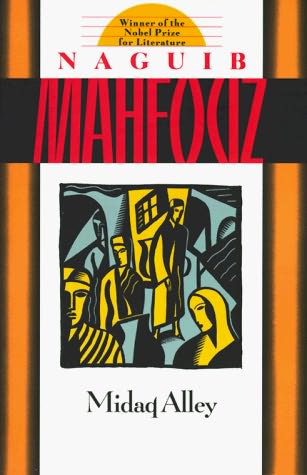
Book Review: Midaq Alley (زقاق المدق) by Naguib Mahfouz: What can one say about the works of Naguib Mahfouz that hasn't already been said? His work has been over-analyzed, over-criticized, overly lauded and, most importantly, occasionally misunderstood.

I am going to take a different route. I am just going to review this one book, which, for me, is the ultimate Naguib Mahfouz novel. It summarizes his ambitions as a novelist, his obsessions, his genius, his style, and his strangely progressive sensibilities.

Midaq Alley, focuses on just that; a small alley where several Egyptian families, widows, singles and orphans live. As is his specialty, Mahfouz takes us on a tour of the lives of these individuals; a tour through their innermost thoughts and dreams. And what a tour it is. Mahfouz creates fascinating characters that leap off the page. From the young woman with dreams of grandeur, who would do anything to achieve money and fame (including becoming a high-class prostitute), to the owner of a small coffee house, a Haj who is also a pederast, to the young man who sees joining the colonial British Army as his only means of becoming a somebody, to the wealthy merchant who, after suffering from a stroke, becomes a reclusive hypochondriac with an obsession with death. The list of character goes on and on.

But Mahfouz's ability to draw fascinating characters is not the only thing that makes this novel a masterpiece. What makes it a masterpiece is Mahfouz's mastery of two things which have been absent from most Arabic novels in recent years. Realistic dialogue and tight plotting.

Here, Mahfouz weaves numerous plot strands, brings them together seemingly effortlessly, creating a compelling narrative that ends with a satisfying conclusion. And let's not forget that this book deals with things like prostitution, colonialism, psycho-sexual problems, youth angst, among many other things in an analytical and progressive-thinking manner; that in itself is a marvel considering that this book was published in Egypt in 1947!

If you want to get introduced to Naguib Mahfouz's work, there's no better introduction than Midaq Alley. A timeless masterpiece by an author who truly understood Egypt, warts and all.

Friday, August 14, 2009

Book Reviews

Book Review: Beyond Paradise وراء الفردوس by Mansoura Ez El Din: After establishing herself as one of Egypt's finest writers with her previous novel, Maryam's Maze, Mansoura Ez El Din decides to do something daring with her second novel. Shift gears and try something different and more difficult to pull off. Well, does she succeed? The novel, titled Beyond Paradise, at first seems to be her attempt at a grand Gothic novel a la some of the works of Joyce Carol Oates; a novel high on melodrama and with a large cast of eccentric characters. But to expect conventionalism from Ez El Din wouldn't be smart, and after the stunningly gripping (and Gothic) opening, the novel shifts gears and becomes a sprawling psychological study of several characters as told through the eyes of an unreliable narrator: a young woman seemingly grieving for her just deceased father. Ez El Din takes us on a compelling journey through the lives and psyches of the characters, and every now and then shows us their worst fears and nightmares with her assured style and penchant for nightmarish imagery. It's an intriguing piece of work, occasionally fascinating, and, above all, daring and stylish. And to me, the last sentence of the novel is sheer brilliance and manages to end the novel on an effectively chilling note.


Book review: The Low-Life الواطى by Mohamed Ghazlan: I am not a fan of socio-political novels, especially ones written by Arab writers. They usually tend to be full of anguish, heavy-handedness, and, above all, they are usually boring as hell. The Low-Life is an exception. It's a darkly satirical piece of work that manages to shed a light on the corruption eating Egypt from the inside out without digressing or preaching. The trick that author Mohamed Ghazlan (a journalist) admirably pulls off here is telling the tale through the first-person voice of a bitter, corrupt former VIP who has now lost favor with powerful Government officials, and therefore gets ostracized and his privileges yanked from under him. The tone of this delicious, wicked, and hugely entertaining novel effortlessly shifts between dark, suspenseful, and, occasionally, darkly comic, as we see a former giant used to getting everything he wants struggling to get people to answer his calls and treat him with respect. And just when you think Ghazlan has run out of tricks, he pulls another bunny out of the hat in the form a perfectly executed ending. Highly recommended, this is a breath of fresh air.

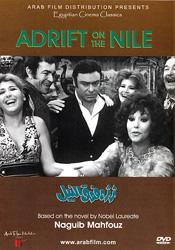
Extra! This edition's Extra! selection is the 1971 Egyptian film Adrift on the Nile ثرثرة فوق النيل , directed by Hussein Kamal. A rousing adaptation of Naguib Mahfouz's novel, this is a film that manages to be wildly daring, experimental, and heartfelt at the same time. With earnest performances, assured direction, and a mostly spot-on script, it is a near-perfect masterpiece about one of the major low points in Egyptian history. Unmissable.

Tuesday, December 23, 2008

The Best of 2008

As for the best book I read in 2008, the answer is simple...

Maryam's Maze (متاهة مريم) By Mansoura Ez El Din: Mansoura Ez El Din's tribute to Gothic literature is nothing less than a marvel. With Egypt's bestseller lists cluttered with repetitive, passive aggressive fiction and non-fiction about Buildings, taxis and problems with the Middle East, here is a book that attempts to do something different and pulls it off in spades.

A harrowing and highly compelling psychological study of a woman's descent into madness, Maryam's Maze uses the Gothic archetypes and imagery as a launching pad and runs with them through a series of vignettes, images and characters that are for the most part unforgettable. Ez El Din's stylish prose, tireless imagination, and penchant for darkly surreal images, make it one of the most surprising and original books to come out of Egypt in a long time. A must read. (Also available in an English-translated edition).

Friday, July 11, 2008

Book Review

Book Review: Miss Egypt (ميس ايجيبت) by Soheir El Mosadefa: This is a controversial book, no doubt about it. It pushes envelopes, hits nerves and seethes with anger. El Mosadefa pulls us in with an opening chapter that makes us think this is going to be an intriguing and suspenseful murder-mystery; after all, the book begins with the murder and sexual mutilation of the young Miss Egypt who is a candidate for the upcoming Miss Universe pageant. An aging detective (who might be psychic) leads the investigation which slowly turns into an obsession for him and his son (who is a successful filmmaker). As the detective tries to make sense of the violent murder and his son is beset by sexual hallucinations in which he is visited by the dead Miss Egypt, we the readers valiantly try to keep up with everything that is going on and with an array of mostly unlikable characters whose speeches soon begin to gnaw on the nerves.
This is an intriguing book, but it is also tremendously frustrating. It seems that the author wanted to mix many genres to produce something unique, and although she has marginally succeeded, that doesn't take away from the fact that by the second half of the book the narrative becomes a chore to get through, and the story veers away from the murder-mystery angle and becomes a socio-political commentary on what one of the characters describes as the "ugliness" that is swallowing contemporary Egypt whole.

Despite being a daring and singular piece of work, the author's verbose style, heavy-handed approach and annoyingly meandering plot-lines combine to make it an ultimately disappointing.

Wednesday, February 27, 2008

Fast Food Cinema!

Hi, there.

Last week, a friend of mine asked me to go the movies with him. I said no. He got angry and told me I was an anti-social recluse who never goes anywhere, especially to the movies. I responded by saying that accusing a filmmaker of being an anti-social recluse was O.K; but accusing them of not wanting to go to the movies was an insult. So I had to explain.

My explanation went something like this.

I have a problem with Egyptian movies nowadays. Not a huge problem, but a problem nonetheless. It eats at me when I am sitting in a movie theater, and for some time now, it has almost ruined my film-going experience. The problem is unoriginality (if I wanted to be diplomatic) or, if you prefer, outright plagiarism!

One has only to look at the film listings page in any Egyptian newspaper and they will get exposed to some of the most shameful types of films to ever haunt the big screen in Egypt since the eighties, when the quality of Egyptian cinema hit an all time low, or at least that's what we thought at the time.

Egyptian cinema has transformed from the so-called "Hollywood" of the Middle East, to more or less a wasteland filled with Hollywood knock-offs and poorly written scripts. Most Egyptian film scripts are carbon copies of better foreign films, with bigger budgets and a hundred times more craftsmanship. You go into an Egyptian film expecting a "good time", whatever that means, and you get one of the following:

1- A trite love story that has been told so many times in so many better ways, that even the most die-hard romantic would have to gag from the amount of saccharine they are being asked to ingest.

2- A film that deals with "Social issues" i.e. stock sexual issues, vague political protest or pure sensationalism, that make any person with open eyes and a functional brain wonder how stupid the filmmakers think he/she is to accept what is on screen as anything but meaningless and unoriginal, and which, for the most part, doesn't reflect contemporary Egyptian society.

3- An all out actioner filled with lame explosions, hilariously bad dialogue, plotlines borrowed from hundreds of American (and better films) that all combine to numb the senses and make you feel that millions of Egyptian pounds have been thrown into a bonfire that makes loud noises and a pretty light.

As for recent Egyptian comedies, in my very humble opinion, they don't qualify as films at all, so the less said about them the better...

Many working screenwriters in Egypt have been plagiarizing ideas from each other and from Hollywood for so long now, that they have forgotten what it takes to make a good film. Originality. Original ideas are supreme, they are the essence of any good story and they make the audience stand up and take notice. The issue of unoriginality and stealing ideas has become so widespread and noticeable in Egyptian cinema that Egypt Today featured an in-depth article that I came across a while back, about the problem, which you can find here.

Then we come to the second part of the problem, the moviegoer. Moviegoers in Egypt have become so passive, so accustomed to the low-quality they have been subjected to in cinemas in recent years, that they don't even put up a fight anymore. If a certain film about a stoned, unemployed loser has become one of the most commercially successful films in Egyptian history, then we are at a crisis, and the Egyptian moviegoer has to help the industry out of it.

"Fast Food Cinema" i.e. cinema that is made of light and generic ingredients that is easy to digest and offers nothing thought-provoking, is a phenomenon that is occurring all over the world and not just Egypt, but the difference is: many film industries around the world are fighting back with independent and alternative films that offer new ideas, new thoughts and new styles that give the viewers something original to chew on other than fast food. Because in the end there is another known term for "fast food" and that is "junk food"!